A1/A3 training and examination
Confirmation of online training and examination in the A1/A3 open category. The qualification expiry date shown on the document is 22 September 2030.
View anonymised A1/A3 confirmation
DRONE THERMOGRAPHY / ANTI-ICING
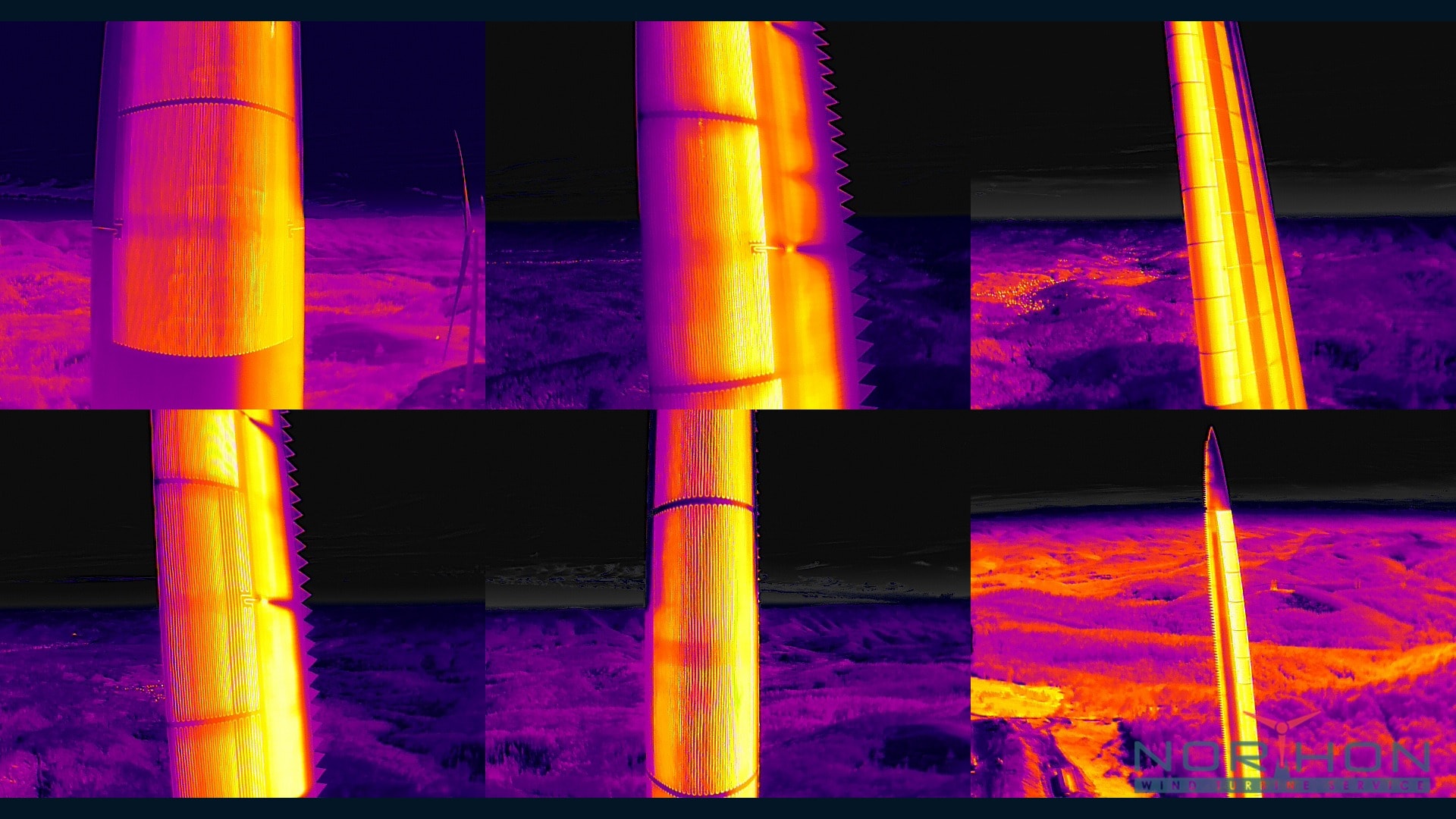
Northon performs drone-based thermal inspections of wind turbine blade anti-icing systems. Using a thermal camera, we document temperature distribution across active heating zones, compare their response and prepare technical records that support further diagnosis.
09 / DRONE THERMOGRAPHY / ANTI-ICING
Aerial thermography enables the blade surface to be observed while the anti-icing system is operating, without the need to access the blade directly. The resulting thermograms show temperature distribution and make it easier to identify differences between individual heating sections.
The inspection is a diagnostic input rather than an isolated root-cause assessment. Results are interpreted together with ambient conditions, the operating mode of the system, turbine documentation and comparable images from the remaining blades.
Technical scope
The inspection is planned using the blade and AIS documentation, the agreed operating state, wind-farm rules and measurement conditions.
UAS operator qualifications
Northon performs Anti-Icing system thermography with unmanned aircraft operated by a trained specialist. The documents below confirm completion of A1/A3 training and examination and UAS operator registration. Personal details, identification numbers and QR codes have been permanently redacted in the copies prepared for publication.
Confirmation of online training and examination in the A1/A3 open category. The qualification expiry date shown on the document is 22 September 2030.
View anonymised A1/A3 confirmation
Confirmation of UAS operator registration for unmanned aircraft used during thermal inspections of wind-turbine blades.
View anonymised UAS operator registrationDelivery method
After the scope, flight conditions and operating state of the anti-icing system are agreed, the pilot records repeatable thermal views of the blades. Images are selected, compared and described in a report, with visible anomalies and areas requiring further verification clearly indicated.
We review system configuration, heating-zone layout, required operating state and wind-farm rules.
We define a safe flight plan with repeatable distance and viewing angles for each blade.
We record thermograms of the successive blade zones and document the test conditions.
We compare corresponding blade and heating-zone images while considering measurement limitations and conditions.
We document observations, thermogram locations and areas recommended for further verification.
Documentation
Diagnostics and service decision
The inspection may support periodic condition assessment, diagnostics after a system alarm, acceptance after repair or comparison of heating zones before the winter season. The final scope always depends on turbine documentation and the purpose of the project.
Uneven thermal response, a section that remains visibly colder than adjacent zones or differences between blades may justify additional electrical or service checks. Thermograms are assessed in their actual operating context.
Scope planning
The scope depends on the turbine and anti-icing system configuration, required image set, flight conditions, site procedures and report requirements.
Northon / Europe
Northon performs drone thermal inspections of wind turbine blade anti-icing systems in Poland and other European countries. Each project is planned with regard to local flight requirements, weather conditions and the agreed turbine operating state.
Preparing an enquiry
Please provide turbine data, the purpose of the inspection and the available anti-icing system documentation. Information about previous alarms or repairs helps define the most useful image and reporting scope.
Northon / Anti-Icing Systems
These thermograms come from actual inspections of blade anti-icing systems. Each image is assessed together with measurement conditions, system operating state and heating-zone configuration.
E-E-A-T / Northon
Technical review: Northon mechanical service team
FAQ
A thermal camera records the temperature distribution on operating blade heating zones. The images are compared and documented to identify areas that may require further verification.
Not by itself. It identifies thermal differences and anomalies that support further electrical, control-system or service diagnosis.
The required operating state is agreed for the project because it materially affects the usefulness and interpretation of the thermal images.
The agreed report may include selected thermograms, image locations, inspection conditions, comparison of heating zones and recommendations for further checks.
No. The method and assessment criteria depend on the system design, turbine documentation, available operating modes and the objective of the inspection.
Turbine model, anti-icing system configuration, turbine count, site location, inspection objective, available documentation and the expected report scope are helpful.
Yes. Projects are delivered in Poland and other European countries, subject to the agreed scope, flight requirements and suitable operating conditions.