
ELECTRICAL THERMOGRAPHY
Wind turbine electrical thermography
Northon performs thermal imaging of cable connections, switchgear and accessible wind-turbine electrical components. We record temperature distribution under operating conditions, compare similarly loaded components and document thermal anomalies.
- Non-contact measurement
- Comparison of similar circuits
- Thermogram report
08 / ELECTRICAL THERMOGRAPHY
Thermography reveals anomalies without dismantling the installation
Thermal images can identify locations that differ from comparable connections or components. Findings may support diagnosis of a poor contact, unequal loading, heat-transfer issue or component defect.
Thermography is a diagnostic input, not an isolated root-cause diagnosis. Results are interpreted with load, measurement conditions, equipment design and available electrical data.
Measurement under load
A thermogram shows a temperature pattern, not just a single reading.
We measure accessible cable connections, terminals, apparatus and current paths operating under an agreed load condition. Test conditions and parameters relevant to subsequent interpretation of the thermal image are recorded.
Phases and components with comparable functions are assessed for differences that cannot be explained by load or installation design. Thermography therefore helps select points for electrical verification rather than replacing diagnosis of the underlying cause.
 01
01Technical scope
Thermal inspection scope
Inspection points are agreed from turbine diagrams, alarm history and safe measurement access.
- generator and converter cable connections
- switchgear, contactors, protective devices and busbars
- transformer and power-path connections
- auxiliary and motor-supply terminals
- phase and similar-component comparison
- thermal/visual image pairing and observation classification
Analysis and documentation
Every anomaly is assessed against measurement conditions and a reference point.
Maximum temperature alone does not determine the condition of a connection. Interpretation considers emissivity, optical access, load, reference temperature and differences between comparable conductors, terminals or devices.
The report may include the thermogram, point location, measurement conditions, observation and recommended next step. This supports planning of a connection check, electrical measurement or repair during an agreed turbine shutdown.
 07
07Delivery method
How is wind-turbine thermography performed?
After agreeing scope and safe access, measurement points are identified, thermal and reference images captured, comparable elements assessed and anomalies reported with conditions and recommendations for further verification.
- 01
Plan
Define inspection points, operating state and safe access rules.
- 02
Capture
Record thermograms, visual images and measurement parameters.
- 03
Analysis
Compare phases, similar components and ambient references.
- 04
Report
Document anomaly location, temperature difference and follow-up priority.
Documentation
What the customer receives
- thermogram and matching visual image
- measurement conditions and parameters
- reference-point comparison
- classification and recommended next step
Diagnostics and service decision
When should thermal imaging be considered?
It may support periodic inspection, acceptance after electrical work, alarm diagnostics, verification after connection tightening or investigation of unusual heating. Known and appropriate load improves usefulness.
Local overheating, phase-to-phase differences, heat traces, odour or recurring protection trips may justify examination. Every finding is interpreted in operating context.
Scope planning
What determines the thermography scope?
Scope depends on point count, equipment availability under load, safe access, electrical procedures and report requirements.
- turbine model and electrical system
- switchgear and point list
- available load during inspection
- safe electrical access
- previous inspection data
- turbine count and report format
Northon / Europe
Wind-turbine thermography across Europe
Northon performs turbine electrical thermography in Poland and other European countries. Timing and measurement conditions are agreed to obtain useful load while maintaining electrical safety.
Preparing an enquiry
What information is needed to prepare the inspection?
Please provide turbine count, point list, expected operating load and reporting requirements. Schematics and previous measurements are also useful.
- manufacturer and turbine model
- switchgear or connection list
- planned operating load
- electrical access procedure
- schematics and previous reports
- site and requested date
Northon / Thermography
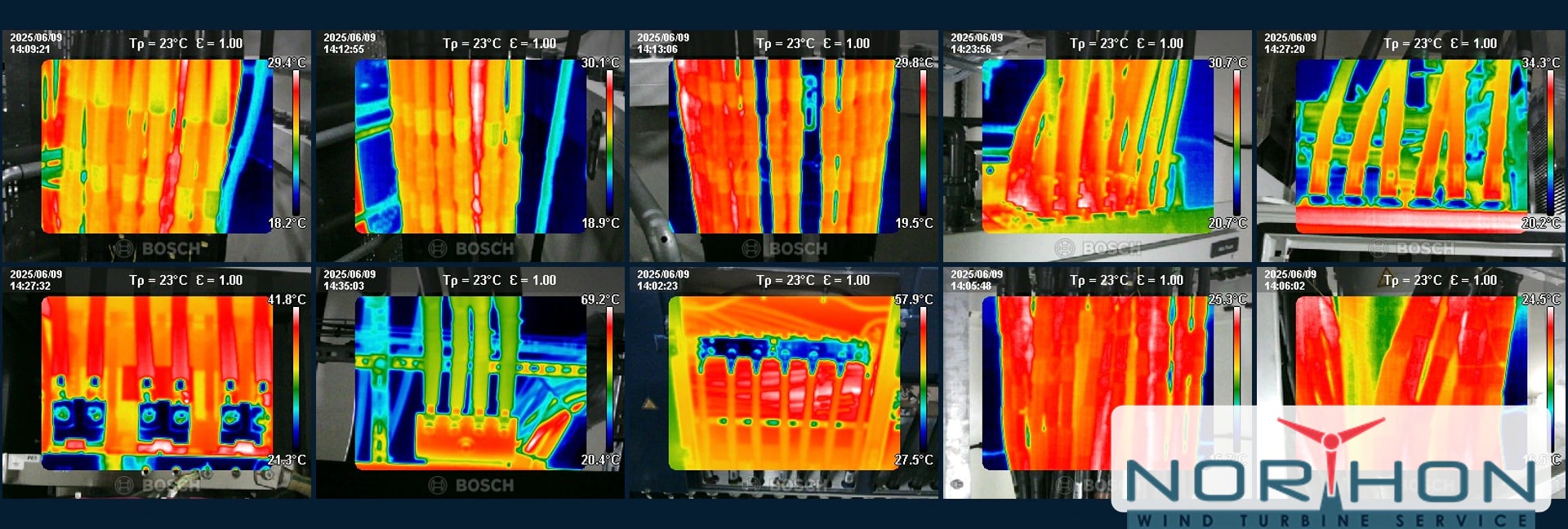
Electrical thermography in practice.
Northon project thermograms show comparisons of loaded cable connections, terminals, apparatus and current paths in wind-turbine electrical installations. Every image is interpreted together with load, emissivity and measurement conditions.
E-E-A-T / Northon
Measurements documented with operating conditions and technical context
Technical review: Northon mechanical service team
FAQ
Frequently asked questions
What is cable-connection thermography?
It is non-contact thermal imaging and comparison of accessible connections and components during operation.
Does the turbine need to be loaded?
Load strongly affects results. The required operating state is defined for the project scope.
Does thermography identify the root cause?
It identifies a thermal anomaly. Additional electrical or mechanical checks may be needed to determine cause.
Which components can be inspected?
Accessible cable connections, switchgear, apparatus and other approved points, subject to electrical safety rules.
What does the report contain?
It may include thermal and reference images, point location, measurement conditions, anomaly description and follow-up recommendation.
What determines inspection cost?
Turbine and point count, access, load availability, electrical procedures and report requirements.
Does Northon provide thermography outside Poland?
Yes. Services are delivered in Poland and other European countries subject to agreed scope and schedule.